Custom closing gifts and branded handover kits: how print shops fulfill small-batch rigid merch for real estate teams
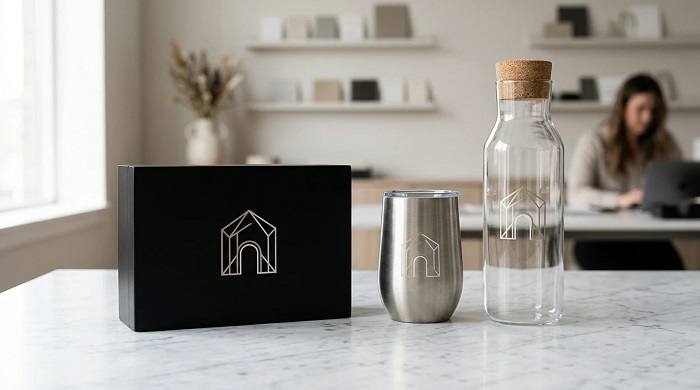
In luxury residential and commercial real estate, the closing table is where long-term referrals begin. Boutique brokerages, pre-construction developers, and property management teams routinely assemble twenty to fifty branded handover kits per quarter—pairing a matte-black lacquered key box with insulated tumblers, a glass carafe, or a clear acrylic desk block carrying the development’s crest and the buyer’s suite number.
For local print shops and gift suppliers serving these teams, the challenge is never order value; it is order fragmentation. Every building launch uses a slightly different palette, and half the items in a single handover box may require individual personalisation—such as a family name or unit identifier—on completely different rigid materials. Traditional pad printing or rotary screen printing makes thirty mixed pieces economically unworkable. Roll-to-roll UV DTF (ultraviolet direct-to-film) transfers solve that short-run fragmentation cleanly when shops manage contrast, gloss, and blank testing properly.
Handling Multi-Item Kits Without Multiple Machine Setups
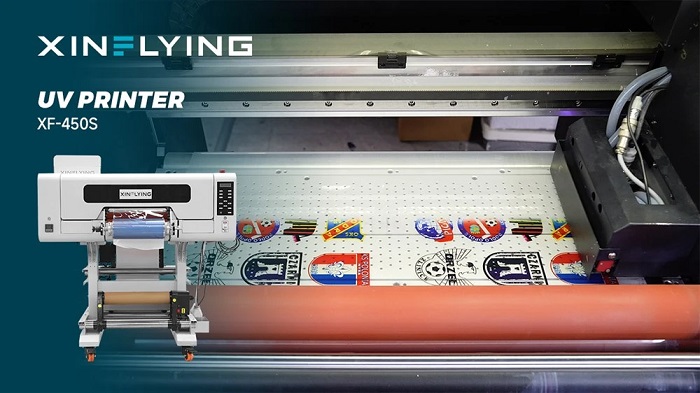
A standard UV DTF workflow prints UV-cured white, CMYK, and clear varnish layers onto an adhesive release film (A-film) and laminates it with a transparent carrier (B-film). Because the finished graphics come off the roll ready to press by hand, a print shop can nest all graphics for a real estate handover kit—key-box emblems, tumbler wraps, glass decanter crests, and outer-box seals—onto one continuous gang sheet.
This removes the two biggest bottlenecks in boutique corporate gifting:
1. Zero per-object jig changes: Moving from a rectangular lacquered wood box to a tapered stainless-steel tumbler requires no rotary fixture calibration or platen height swap on the printer.
2. Easy variable personalisation: Adding individual buyer initials or penthouse numbers to ten kits costs no extra setup plates; the operator simply nests the unique names alongside the brokerage’s main emblems on the same film run.
Achieving Refined Luxury Aesthetics on Dark and Clear Surfaces
Real estate teams are particularly sensitive to how branded packaging looks and feels in person. Loud, thick, plastic-looking decals immediately undercut the impression of a high-end development.
To deliver a subtle, architectural finish with UV DTF, print shops focus on three pre-press and finishing choices:
- Tonal contrast with spot varnish: On matte-black gift boxes or powder-coated drinkware, pairing crisp monochrome or muted metallic-toned artwork with a controlled gloss varnish pass creates a clean light-catching accent without relying on specialty foil hardware (note that genuine metallic foil requires dedicated foil workflows rather than standard CMYK simulation).
- Tight white-underbase choke: Against dark lacquered or charcoal blanks, even a hairline sliver of exposed white ink around fine serif typography stands out immediately. Calibrating white choke in the RIP keeps edges sharp under close inspection.
- Reverse-side discipline on glass carafes: When applying a logo to clear glass or crystal-clear acrylic blocks, remember that the adhesive underside remains visible through the back wall unless the design is planned for front-only viewing or printed with a compatible double-sided layer sequence.
Testing Coated Boxes and Drinkware Before Full Kit Assembly
Luxury packaging blanks are notoriously inconsistent across suppliers. A “matte-black rigid box” from one wholesale distributor may use a smooth laminated paper stock that bonds tightly to standard rigid UV DTF adhesive, while a nearly identical box from another vendor uses a soft-touch silicone-like coating designed to resist fingerprints—which also resists pressure-sensitive adhesives.
| Kit Item | Typical Surface Risk | Pre-Production Check |
|---|---|---|
| Soft-touch rigid key box | Anti-fingerprint or silicone-like coating can weaken adhesive bond | Apply one test transfer and check corner adhesion after 24 hours before running the full batch |
| Powder-coated travel tumbler | Coarse matte texture reduces contact area on thin serif lines | Verify minimum stroke width and burnish firmly along the cylinder axis |
| Glass carafe or acrylic block | Dust or oils cause visible silvering under clear carrier transfer | Degrease thoroughly with lint-free wipes and confirm reverse-side appearance |
Shops should also set clear care expectations with the brokerage: decorative UV DTF transfers on drinkware and glassware are surface-applied cured ink layers, not fired ceramic glazes, so hand-washing is advised and direct food-contact interiors should remain undecorated.
Scaling Boutique Gifting Into Repeat Commercial Accounts
Once a print shop proves it can turn around twenty-five cohesive closing kits in forty-eight hours without surface defects, property developers and real estate agencies often become steady quarterly accounts across new towers and leasing offices. Print service providers building out dedicated rigid-merchandise capacity can explore XINFLYING UV DTF equipment to compare roll widths and printhead setups suited to mixed short-run gifting.
Before quoting a developer’s next handover kit, ask for one sample of every blank in the box—especially any soft-touch packaging. Spending ten minutes testing adhesion on the actual coated box protects both your margin and your client’s closing-day presentation.