How to replace a refrigerator seal yourself: installation instructions and maintenance
The refrigerator door seal is responsible for the airtightness of the refrigerator: it keeps cold air in and prevents warm air from escaping. When the seal loses its elasticity, tears, or becomes detached, the compressor runs longer, the temperature fluctuates, and excess condensation and ice forms on the walls.
Replacing the seal is an easy procedure that can be done yourself with care or fridge repair near me. Below are the rules for selecting, inspecting, and installing the door, as well as tips to help avoid door warping and recurring sealing issues.
How to identify rubber seal wear by symptoms: frost, condensation, warm chamber
A worn or deformed seal allows warm air to enter, causing the refrigerator to run longer and more frequently, and the temperature and humidity in the chambers to become unstable.
It’s easier to assess the condition of the rubber seal by a combination of symptoms: frost, condensation, and a noticeably warm chamber rarely appear “in isolation” if the cause is a loose door seal.
Key symptoms of wear and how to check them
- Ice around the perimeter (on the frame, at the upper/lower corners, near the hinges): appears due to the constant suction of moist air, which cools and Freezes in cold areas.
- Condensation on the seal and near the door: Drops on the rubber, streaks on the plastic, or moisture on the shelves near the door indicate a cold leak and moisture influx from outside.
- Warm compartment with normal settings: Food is cooled less efficiently, the temperature fluctuates, the compressor may run almost non-stop, and the freezer builds up ice.
- Odors and drying out of food: Air is sucked in, disrupting circulation and humidity, causing food to lose moisture faster or absorb foreign odors.
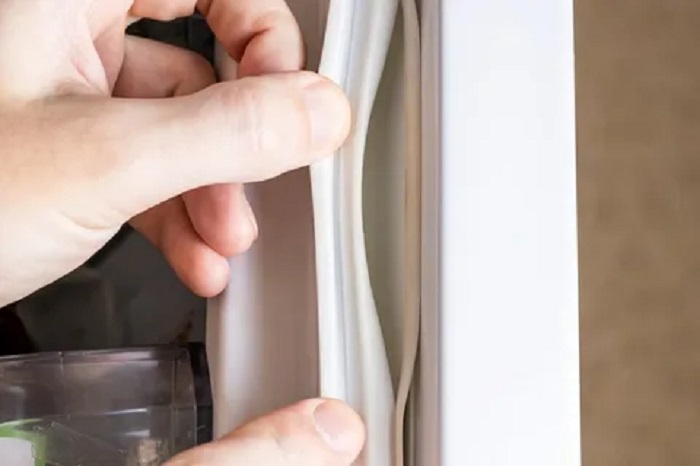
- Inspect the rubber: Check for cracks, tears, “waves,” areas where the rubber has hardened, and areas where the seal has come away from the groove.
- Check the fit: Close the door and gently pull a sheet of paper along Perimeter. If the sheet easily comes out in one or more places, there is a leak there.
- Geometry assessment: Door misalignment or sagging hinges can mimic “rubber wear.” If the gap changes diagonally, first check the door adjustment.
- Post-defrost check: If, after complete defrosting and drying, condensation and ice quickly return right at the door edge, the seal is highly likely leaking.
Summary: If you see repeated ice and condensation at the door edge, and the refrigerator is noticeably less able to maintain temperature, these are typical signs of a leak through the rubber seal.
Solution rule: If a localized leak is present, first rule out contamination and door misalignment. However, if there are cracks, hardened rubber, or “dips” around the perimeter, it is more rational to replace the seal to restore the seal and normal operation of the refrigerator.