Is Miami becoming a new trade finance hub
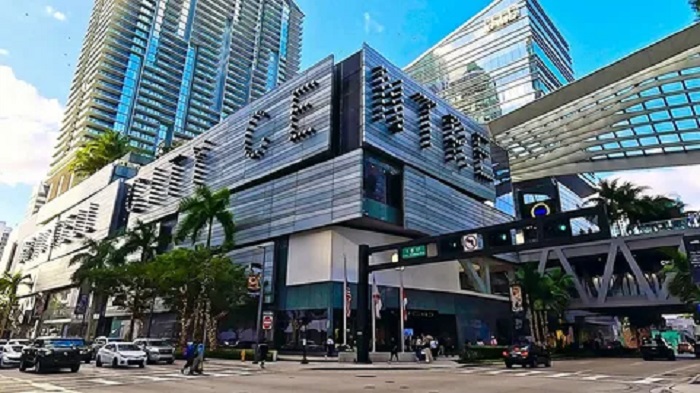
Miami has always been a trading city. What’s changing is how much financial infrastructure is now clustering around that trade, especially for U.S. companies moving goods domestically and across Latin America and the Caribbean.
So, is Miami becoming a real trade finance hub, not just a “gateway” slogan? Yes, in a very practical sense. Not because it’s trendy, but because the ingredients that make trade finance work are concentrated there: logistics, bank talent, cross-border networks, and a deep bench of non-bank capital.
Trade finance follows trade, and Miami sits on the flow
Trade finance is not a standalone industry. It’s a support layer for real transactions: imports, exports, domestic distribution, and cross-border supply chains.
Miami is one of the few U.S. metros where the logistics backbone and the international banking backbone live in the same neighborhood. Miami International Airport positions itself as the leading U.S. airport for international air freight and reported a 2024 record of 3 million tons of freight. PortMiami reports over 1.1 million TEUs handled and promotes Foreign Trade Zone 281 as part of its cargo platform.
That matters because trade finance underwriting starts with movement: shipping routes, documents, cargo handling, and the reality of where goods sit, when title moves, and who controls release.
Banking density and “trade finance muscle memory” are real in Miami
Miami’s finance pitch is not just “lots of wealth moved here.” The city has a long-running international banking ecosystem tied to Latin America. The Miami-Dade Beacon Council cites over 60 international banks operating in the city and frames Miami as the largest U.S. banking hub outside of New York.
On top of that, the Florida International Bankers Association (FIBA) is headquartered in Miami and is explicitly focused on international banking education and community. That’s a signal: this isn’t a new conversation in Miami. Trade finance is part of the local banking language.
And you can see the broader narrative too: the Financial Times has pointed to Miami’s concentration of foreign financial institutions and its push to position itself as a global business center with strong links to Latin America.
Non-bank lenders are filling gaps banks won’t touch
Even in a bank-heavy city, a lot of deals don’t fit bank credit boxes. That’s where Miami’s second advantage shows up: non-bank financial companies (NBFCs), specialty lenders, private credit funds, family-office capital, and private money lenders that can price risk differently and move faster.
In plain terms: if your deal is too small, too urgent, too concentrated, or too operationally messy for a bank, Miami has more “Plan B” options than most U.S. markets.
This matters for U.S. traders working with LATAM because timelines are rarely clean. Cargo delays. Document discrepancies. Counterparty payment behavior varies. Banks want perfection. Non-banks often accept “imperfect but controlled” if the structure is tight and pricing compensates.
What gets financed in a Miami-style trade finance market
When people say “trade finance,” they often mean letters of credit. That’s only one slice. In practice, a Miami-centered trade finance stack can include:
- Documentary LC lines for repeat importers and exporters
- Back-to-back LC structures where the buyer LC supports issuance to the supplier
- Receivables finance against eligible B2B invoices
- Inventory finance tied to controlled warehousing or verified in-transit cargo
- Borrowing base facilities that blend receivables and inventory with reporting rules
- Structured commodity finance for repeat flows in energy, agri, and metals
- Private credit participation alongside banks for larger tickets
If you trade petroleum products, metals, or agri, you already know why this is attractive: the business is margin-thin, volume-heavy, and cash timing is everything.
Why Miami fits U.S. domestic and U.S.-LATAM traders
If you trade domestically in the U.S., the “international banking” angle still helps because trade finance underwriting is about controls. Domestic inventory and receivables can be financed using the same discipline: field exams, borrowing bases, lockboxes, reporting, covenants.
If you trade with LATAM, Miami adds extra advantages:
- Deep familiarity with cross-border counterparties and document flows
- Logistics talent that understands real-world shipment timing
- More comfort with Spanish and Portuguese speaking counterparties and operators
- A concentration of services around the trade lifecycle: freight forwarders, inspectors, collateral managers, trade credit insurance brokers, specialized counsel
Also, Miami Customs District trade volumes are meaningful. The Beacon Council cites total trade of about $137B in 2023 for the Miami Customs District, framing it as a major share of Florida’s two-way trade.
The part everyone ignores: trade finance is won or lost in documentation and controls
Here’s the hard reality. If you want trade finance in Miami (or anywhere), your deal needs to look “financeable” on paper. Many traders show up with a commercial story and get rejected because the lender sees:
- Unclear title and release mechanics
- Weak documentary discipline (high discrepancy risk)
- No controlled collections
- Concentration risk in one buyer or one supplier
- Thin financial reporting and no borrowing base logic
- Compliance gaps in KYC, beneficial ownership, sanctions screening
A lender does not lend against your confidence. They lend against enforceability and downside control.
So yes, Miami’s ecosystem is strong. But it won’t save a messy file.
What an operator should do right now
If you want to take advantage of the Miami trade finance market, make your request lender-ready:
- Map the flow clearly: product, routes, counterparties, ticket sizes, and payment terms.
- Pick the right instrument: LC line vs receivables vs inventory vs borrowing base.
- Lock the controls: where proceeds land, who controls documents, who verifies cargo, how disputes are handled.
- Prepare reporting: aged receivables, inventory by location, open shipments, exposure by counterparty.
- Be straight about risk: if there are sanctions-adjacent geographies or intermediaries, address it upfront with a compliance posture.
This is what gets deals through credit committees and investment committees.
Where Financely fits
Financely serves companies in the USA trading domestically and with Latin America. We help structure trade finance requests so banks and non-bank lenders can actually underwrite them: clear controls, lender-ready documentation, and the right facility type for your flow.
If you want to see how we position trade and structured financing mandates, start here.